6 Best Red Dot for Kimber 1911 in 2026: Mounting & Compatibility
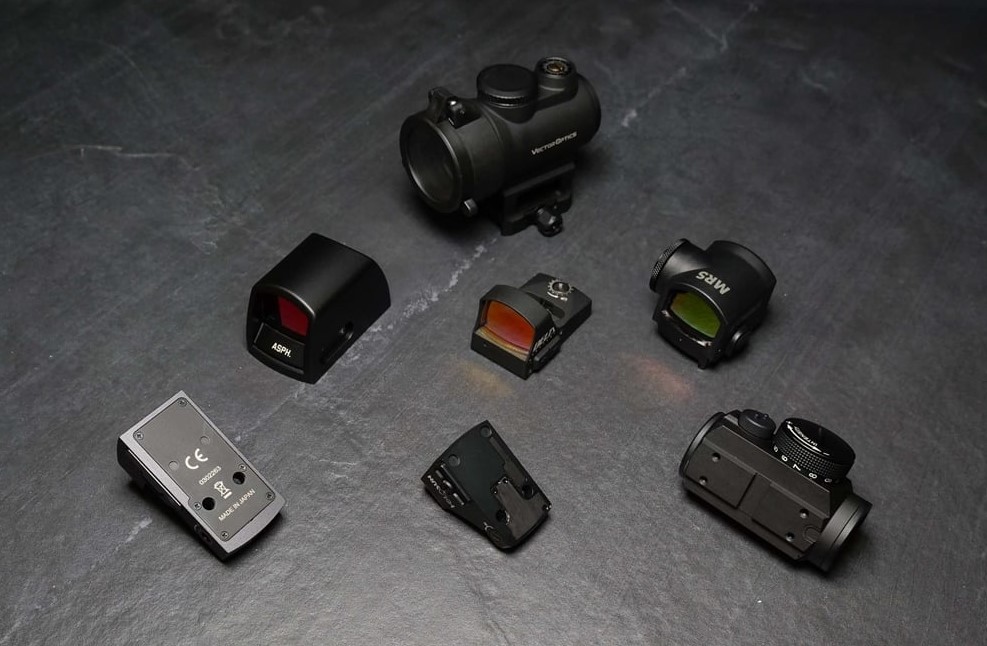
Finding the best red dot for Kimber 1911 pistols is not as simple as buying the most popular optic and bolting it on. The 1911 slide is narrow, many Kimber models are not optics-ready, and the mounting system matters just as much as the dot itself.
I like red dots on 1911s because they make the pistol faster, especially for aging eyes, indoor ranges, and precise defensive practice. But I also learned quickly that Kimber 1911 compatibility depends on whether your slide is factory cut, custom milled, or using a rear-sight dovetail adapter. For this guide, I focused on optics that make sense on a Kimber 1911 in terms of durability, footprint support, window size, and practical mounting options.
Quick Summary
My top overall pick is the Trijicon RMR Type 2 because it is rugged, proven, and widely supported by 1911 mounting plates and slide cuts. The HOLOSUN 507C-X2 is my favorite value option because it gives me multiple reticles and strong battery life for less money. For range work, I like the Trijicon SRO and Leupold Deltapoint Pro because their larger windows make dot tracking easier. If you want a lower-profile or more compact setup, the Trijicon RMRcc and Vortex Venom are also strong choices, depending on your mounting system.
Top Product List
Trijicon RMR Type 2 — Best for overall Kimber 1911 use
HOLOSUN 507C-X2 — Best for value and reticle options
Trijicon SRO — Best for range and competition shooting
Leupold Deltapoint Pro — Best for large window visibility
Trijicon RMRcc — Best for slim concealed-carry builds
Vortex Venom — Best budget-friendly 1911 range optic
6 Best Red Dot for Kimber 1911 in 2026: Mounting & Compatibility
Trijicon RMR Type 2
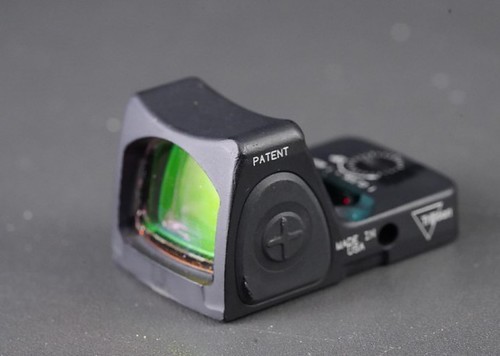
The Trijicon RMR Type 2 is my favorite all-around red dot for a Kimber 1911 because it balances durability, size, and mounting support better than almost anything else. On a steel-frame 1911, it feels right at home.
Footprint: Trijicon RMR
Style: Open-emitter reflex sight
Best use: Carry, duty-style use, range training
Reticle: Red dot
Housing: Rugged forged-style design
Battery access: Bottom-loading battery
Pros
Extremely durable
Excellent aftermarket plate support
Compact enough for a 1911 slide
Proven on hard-use pistols
Cons
Battery change usually requires removing the optic
Window is smaller than competition-focused optics
More expensive than many alternatives
My personal experience with the RMR Type 2 has been confidence-building. I do not baby optics on 1911s, and the RMR is the one I trust most when I want the pistol to feel defensive rather than experimental. The dot is crisp enough for slow fire, and once I get my presentation consistent, it is fast from the holster.
Online customer feedback usually praises the RMR Type 2 for ruggedness, reliability, and long-term zero retention. The most common complaints I see are about the bottom battery compartment and the premium price.
For mounting on a Kimber 1911, the RMR Type 2 does not mount directly to a standard non-optics-ready slide. You need either an RMR-pattern slide cut, a Kimber optics-ready plate that supports the RMR footprint, or a rear dovetail adapter. For the cleanest setup, I prefer a direct RMR mill because it keeps the optic lower.
➤➤➤ Click Here to Check Price on Amazon
➤➤➤ Click Here to Check Price on OpticsPlanet
➤➤➤ Click Here to Check Price on EuroOptic
HOLOSUN 507C-X2
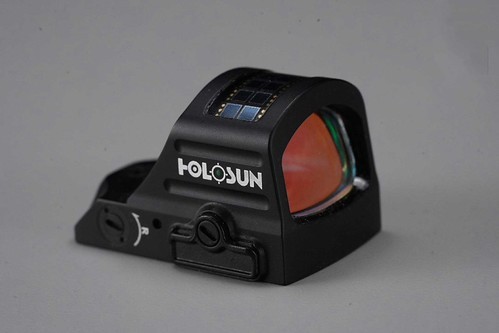
The HOLOSUN 507C-X2 is the red dot I recommend when someone wants strong features without paying Trijicon money. On a Kimber 1911, it gives me a practical mix of durability, reticle flexibility, and easy usability.
Footprint: RMR-style footprint
Style: Open-emitter reflex sight
Best use: Range, carry, defensive practice
Reticle: Multiple reticle system
Battery access: Side-loading tray
Notable feature: Solar backup on many 507C configurations
Pros
Excellent feature set for the money
Multiple reticle choices
Side battery tray is convenient
Works with many RMR-pattern mounts
Cons
Not as battle-proven as the RMR
Open emitter can collect lint or debris
Slightly busy reticle if you prefer a simple dot
I like the 507C-X2 on a Kimber 1911 because the circle-dot reticle is easy to pick up during presentation practice. When my draw is a little sloppy, the larger reticle helps me find the aiming point quickly. For pure precision, I switch to the dot-only setting.
Customer feedback is generally very positive around value, battery access, and reticle options. Some users prefer the simplicity and brand history of Trijicon, but many shooters feel the Holosun gives them more usable features for everyday range and carry use.
For mounting, the HOLOSUN 507C-X2 usually works with RMR-pattern mounting solutions. It will not mount directly to a plain Kimber 1911 slide unless the slide is cut for that footprint. You will need an RMR cut, an RMR-compatible optics plate, or a dovetail adapter.
➤➤➤ Click Here to Check Price on Amazon
➤➤➤ Click Here to Check Price on OpticsPlanet
➤➤➤ Click Here to Check Price on EuroOptic
Trijicon SRO
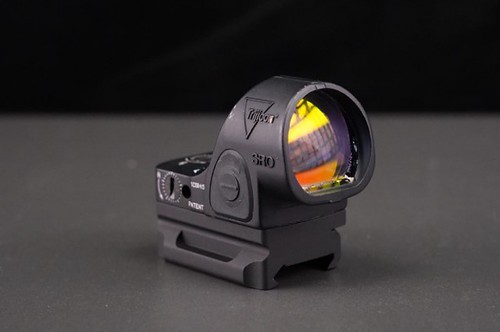
The Trijicon SRO is my favorite Kimber 1911 red dot for range use and competition-style shooting. It has a large, round window that makes dot tracking much easier than smaller defensive optics.
Footprint: Trijicon RMR
Style: Open-emitter reflex sight
Best use: Competition, range, fast target transitions
Reticle: Red dot
Window: Large circular viewing window
Battery access: Top-loading battery
Pros
Huge, easy-to-use window
Uses RMR footprint
Top battery access
Excellent for fast follow-up shots
Cons
Less compact than the RMR
Not my first choice for concealed carry
Large front overhang may affect some slide/mount setups
On a Kimber 1911, the SRO feels almost like cheating at the range. The window is forgiving, and I can track the dot through recoil better than with smaller optics. For bullseye-style work and steel plates, I find it extremely comfortable.
Customer feedback often highlights the SRO’s big window, clear glass, and competition-friendly design. The main concern from users is durability compared with the RMR, especially for hard duty use or situations where the optic may take direct impact.
Mounting is usually straightforward if your Kimber 1911 is cut for the RMR footprint or uses an RMR-compatible plate. However, because the SRO has a larger front housing, I always check clearance before committing to a mount. On a standard Kimber 1911 slide, it requires milling, a compatible mounting plate, or a dovetail adapter.
➤➤➤ Click Here to Check Price on Amazon
➤➤➤ Click Here to Check Price on OpticsPlanet
➤➤➤ Click Here to Check Price on EuroOptic
Leupold Deltapoint Pro
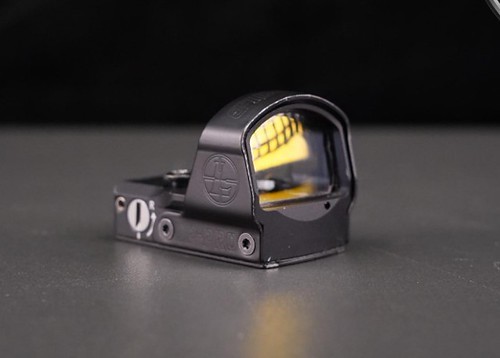
The Leupold Deltapoint Pro is a strong option if you want a big, bright window on a Kimber 1911 without going to an oversized competition-only feel. I especially like it for range pistols and full-size 1911 builds.
Footprint: DeltaPoint Pro
Style: Open-emitter reflex sight
Best use: Range, competition, general shooting
Reticle: Red dot
Window: Large rectangular window
Battery access: Top-loading battery
Pros
Large viewing window
Top battery access
Clear glass
Fast dot acquisition
Cons
Requires DeltaPoint Pro-compatible cut or plate
Taller than some micro red dots
Not as many 1911 mounting options as RMR-pattern optics
My experience with the Deltapoint Pro has been very positive when speed matters. The window feels open, and the dot is easy for me to recover during recoil. On a Kimber 1911, I prefer it on a range or competition setup rather than a minimalist concealed-carry pistol.
Online customer feedback usually points to the large window, clean image, and easy battery access as major strengths. The common negatives are size, height, and the need to make sure the mounting footprint matches the pistol setup.
For mounting, the Deltapoint Pro does not share the RMR footprint. It needs a DeltaPoint Pro-specific slide cut, compatible optics plate, or dovetail adapter. I would not assume it fits an RMR-cut Kimber 1911 without a proper adapter plate.
➤➤➤ Click Here to Check Price on Amazon
➤➤➤ Click Here to Check Price on OpticsPlanet
➤➤➤ Click Here to Check Price on EuroOptic
Trijicon RMRcc
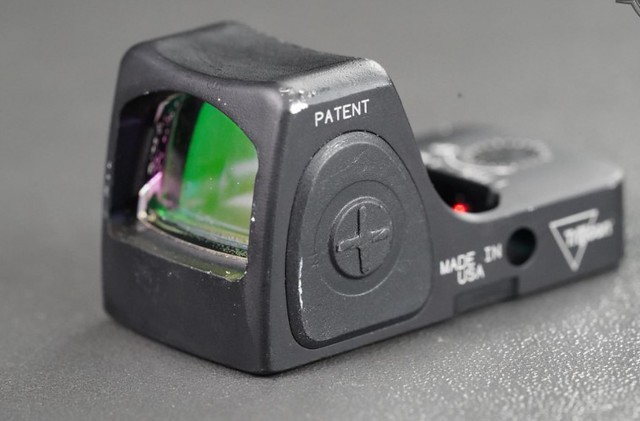
The Trijicon RMRcc is the optic I would consider for a slim, carry-focused Kimber 1911 where width matters. It is narrower than the standard RMR, which can make it visually and physically fit a 1911 slide more naturally.
Footprint: Trijicon RMRcc
Style: Open-emitter reflex sight
Best use: Concealed carry, slim pistol builds
Reticle: Red dot
Profile: Narrow compact housing
Battery access: Bottom-loading battery
Pros
Slimmer than standard RMR-size optics
Excellent for concealed carry
Durable housing
Looks proportional on narrow slides
Cons
Requires RMRcc-specific mounting
Smaller window than full-size optics
Less universal than the RMR footprint
I like the RMRcc when I want a Kimber 1911 to stay sleek. The smaller window requires a more consistent draw, but the tradeoff is a cleaner carry profile. For me, it makes the most sense on commander-size or carry-oriented 1911s.
Customer feedback tends to praise the RMRcc for concealability, ruggedness, and its slim shape. The most common frustration is that it uses its own footprint, so mounting options must be chosen carefully.
The RMRcc does not mount directly to a standard Kimber 1911 slide. It requires an RMRcc-specific slide cut, compatible plate, or adapter. Do not confuse the RMRcc footprint with the standard RMR footprint; they are not the same.
➤➤➤ Click Here to Check Price on Amazon
➤➤➤ Click Here to Check Price on OpticsPlanet
➤➤➤ Click Here to Check Price on EuroOptic
Vortex Venom

The Vortex Venom is my budget-friendly pick for a Kimber 1911 range pistol. It is not the optic I would choose first for a hard-use carry gun, but it is easy to shoot, affordable, and fun on a classic 1911.
Footprint: Vortex/Burris-style mounting pattern
Style: Open-emitter reflex sight
Best use: Range shooting, casual competition
Reticle: Red dot
Battery access: Top-loading battery
Profile: Compact reflex design
Pros
Good value
Top battery access
Clear, usable window
Great for range-focused 1911s
Cons
Not as rugged as premium duty optics
Different footprint than RMR
Mounting support depends heavily on plate choice
I have always found the Venom easy to live with on range pistols. The controls are simple, the top battery access is convenient, and the sight picture feels natural. On a Kimber 1911, I would use it for target shooting, not as my first choice for a defensive carry build.
Customer feedback commonly praises the Venom for value, ease of use, and Vortex support. Complaints usually focus on durability expectations and making sure the correct mount or plate is used.
For mounting, the Vortex Venom usually needs a Venom-compatible plate, dedicated slide cut, or dovetail adapter. It does not directly fit an RMR-cut Kimber 1911 unless you use a proper adapter solution.
➤➤➤ Click Here to Check Price on Amazon
➤➤➤ Click Here to Check Price on OpticsPlanet
➤➤➤ Click Here to Check Price on EuroOptic
How to Choose the Right Red Dot Sight
For a Kimber 1911, I start with mounting before I think about reticle features. A standard Kimber 1911 slide is usually not ready for a red dot unless it has been milled or comes optics-ready. That means you need to know your slide cut, plate system, or rear dovetail adapter before buying the optic.
The RMR footprint is the safest choice for broad compatibility. That is why I rank the Trijicon RMR Type 2 and HOLOSUN 507C-X2 so highly. If your gunsmith is milling the slide, an RMR-pattern cut gives you more future options.
For concealed carry, I care about width, durability, and snag resistance. The Trijicon RMRcc is excellent for a slim profile, while the RMR Type 2 is better if you want a tougher, more universal footprint.
For range and competition use, window size matters more. The Trijicon SRO and Leupold Deltapoint Pro are easier for me to track under recoil, especially on fast transitions.
I also look at battery access. Top-loading and side-loading batteries are convenient because I do not have to remove the optic. Bottom-loading optics can still be excellent, but I prefer to confirm zero after every battery change.
Finally, consider sight height. A red dot mounted on a dovetail adapter will usually sit higher than a milled slide setup. A direct-milled slide looks cleaner, tracks better for me, and often makes backup iron sight selection easier.
FAQs
Can I mount a red dot directly to a Kimber 1911?
Usually, no. A standard Kimber 1911 generally needs a milled slide, an optics-ready plate system, or a rear-sight dovetail adapter.
What footprint is best for a Kimber 1911?
I prefer the RMR footprint because it has strong support, proven durability, and many compatible optics, including the Trijicon RMR Type 2 and HOLOSUN 507C-X2.
Is a dovetail mount good enough?
A dovetail mount can work for range use, but I prefer direct milling for serious carry because it sits lower and feels more secure.
What is the best red dot for Kimber 1911 concealed carry?
My top concealed-carry choice is the Trijicon RMR Type 2 for durability. For a slimmer build, I would look at the Trijicon RMRcc.
Is the Trijicon SRO good for a Kimber 1911?
Yes, especially for range and competition use. I like the big window, but I would choose the RMR Type 2 over the SRO for hard defensive carry.
Conclusion
The best red dot for Kimber 1911 pistols depends on how the gun is mounted and how you plan to use it. For most shooters, I think the Trijicon RMR Type 2 is the strongest overall choice because it is durable, compact, and widely supported. The HOLOSUN 507C-X2 is the best value pick, while the Trijicon SRO and Leupold Deltapoint Pro are better for range speed and visibility. For slim carry, the Trijicon RMRcc makes the most sense, and the Vortex Venom remains a solid budget-friendly range option.